
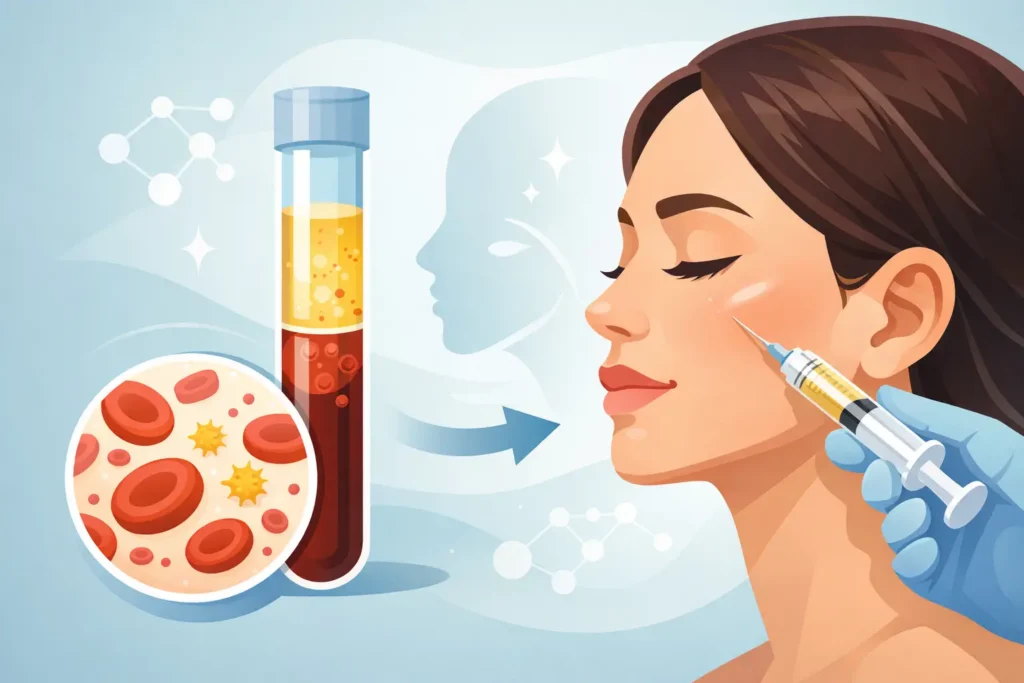
A lot of skin treatments promise a fresher, smoother look. PRP stands out because it uses your body’s own healing factors rather than relying only on synthetic ingredients or more aggressive procedures. If you’ve been asking what is PRP treatment for skin, the short answer is this: it is a regenerative treatment that uses platelet-rich plasma from your own blood to support collagen production, improve skin texture, and help the skin look healthier and more refreshed.
That simple definition helps, but it does not tell you why PRP has become such a popular option for patients who want visible results with a more natural approach. For many adults balancing work, stress, sun exposure, and the early or advanced signs of aging, PRP offers a way to improve skin quality without surgery and without trying to completely change how they look.
What Is PRP Treatment for Skin and How Does It Work?
PRP stands for platelet-rich plasma. Platelets are best known for helping blood clot, but they also contain growth factors that play a role in tissue repair and regeneration. In a PRP skin treatment, a small sample of your blood is drawn and placed in a centrifuge to separate the platelet-rich plasma from other components. That concentrated plasma is then applied or injected into targeted areas of the skin.
The goal is to stimulate the skin’s natural repair response. When PRP is introduced into the treatment area, it may help support collagen and elastin production, improve circulation in the area, and encourage healthier-looking skin over time. That is why PRP is often used for concerns like fine lines, dullness, acne scarring, uneven texture, and loss of firmness.
PRP is not a filler, and it does not work like Botox. Fillers add volume directly. Neuromodulators relax muscle activity that causes expression lines. PRP is different. It focuses on improving the quality of the skin itself by activating repair mechanisms that are already present in your body.
Why Patients Choose PRP for Skin Rejuvenation
Many patients are not looking for an overdone result. They want skin that looks smoother, brighter, firmer, and more alive. PRP appeals to that goal because the improvement tends to look gradual and natural.
Another reason patients choose PRP is versatility. It can be used under the eyes, across the face, on the neck, and sometimes in areas where skin texture or crepiness has become more noticeable. It is also commonly paired with treatments such as microneedling, where tiny controlled channels in the skin help PRP penetrate more effectively.
For patients focused on long-term skin quality, PRP fits well into a broader regenerative and aesthetic plan. Rather than chasing one quick fix after another, it can be part of a strategy built around collagen support, prevention, and maintenance.
What PRP Can Improve
PRP is best understood as a skin quality treatment. That means it may help with the tone, texture, and overall appearance of the skin, but it is not the right answer for every concern.
Patients often consider PRP when they notice fine lines beginning to settle in, skin that looks tired or less radiant, mild acne scarring, or an overall loss of firmness. It may also be used to soften the look of dark under-eye hollows or crepey skin, although results in delicate areas can vary from person to person.
The strongest candidates tend to be people who want gradual improvement and are willing to build results over a series of treatments. If someone is expecting a dramatic lift or immediate structural change, other treatments may be a better fit.
What a PRP Appointment Typically Looks Like
The process is straightforward, but it should still be handled in a clinical setting with proper evaluation and technique. Your provider usually starts with a consultation, where they assess your skin, review your medical history, and talk through your goals. This matters because PRP works best when it is part of a personalized treatment plan rather than a one-size-fits-all service.
On treatment day, a small amount of blood is drawn, similar to a standard lab test. The blood is then spun in a centrifuge to isolate the platelet-rich plasma. Depending on the treatment plan, the PRP may be injected directly into targeted areas or applied topically after microneedling.
Most appointments are relatively quick. You may have some redness, mild swelling, or sensitivity afterward, especially if PRP is combined with microneedling. Downtime is usually limited, but recovery can depend on the depth of treatment and your skin’s sensitivity.
When You Will See Results
PRP is not an instant-result treatment. That is one of the most important things to understand before booking. Because it works by stimulating the skin’s own regenerative process, improvements develop gradually.
Some patients notice an early glow within days, especially after microneedling with PRP. More meaningful changes in texture, tone, and firmness often take several weeks to become visible, with continued improvement over the following months. A series of treatments is commonly recommended for better results, followed by maintenance based on your skin condition, age, and goals.
This is where expectations matter. PRP can be highly rewarding for the right patient, but it is not a shortcut. It is a regenerative approach that builds over time.
Who Is a Good Candidate for PRP?
PRP can be a strong option for healthy adults who want non-surgical skin rejuvenation and prefer a treatment that supports natural-looking results. It is often a good fit for people dealing with early signs of aging, mild textural concerns, acne scars, or skin that simply looks depleted.
That said, not everyone is an ideal candidate. Certain blood disorders, active infections, uncontrolled medical conditions, or skin issues in the treatment area may affect whether PRP is appropriate. If you are pregnant, breastfeeding, or taking medications that influence healing or platelet function, your provider may recommend waiting or considering another option.
This is why a proper consultation matters. In a physician-led setting, your provider can decide whether PRP makes sense on its own or whether a combination approach would serve you better.
PRP With Microneedling vs PRP Injections
Patients often hear about PRP in two formats: with microneedling or as direct injections. Both use platelet-rich plasma, but they are not exactly the same treatment.
Microneedling with PRP is often chosen for overall rejuvenation. The microneedling device creates controlled micro-injuries in the skin, and the PRP is applied to support healing and collagen stimulation. This option is often used for texture, enlarged pores, acne scars, and general skin refreshment.
PRP injections are more targeted. They may be used in areas like under the eyes or in specific regions where skin quality needs focused support. Whether one is better than the other depends on your anatomy, skin concerns, and desired outcome. In some cases, a provider may recommend combining techniques over time.
Benefits, Limits, and the Value of a Personalized Plan
PRP has real advantages. It uses material from your own body, it supports a natural-looking outcome, and it can complement other skin treatments well. For patients who want to look more rested and improve skin quality without surgery, it can be an appealing option.
It also has limits. Results are not guaranteed, and they are rarely dramatic after one session. PRP will not replace a facelift, erase deep folds, or create volume where significant volume loss exists. Skin health also depends on the basics – sun protection, hydration, treatment consistency, and the right broader plan for your age and goals.
That is where a more complete approach makes a difference. At MedSmart Wellness Centers, regenerative aesthetics work best when they are aligned with the bigger picture of how you want to look, feel, and age. For some patients, PRP is the right next step. For others, it works best alongside treatments that address collagen, texture, hydration, or structural support more directly.
If you are considering PRP, the smartest move is not chasing a trend. It is getting a clear evaluation of your skin, your timeline, and the result you actually want. The right treatment should fit your biology and your goals, not just your social feed.
Healthy skin rarely comes from one miracle procedure. It usually comes from choosing treatments that work with your body, staying consistent, and giving regeneration enough time to show up.