
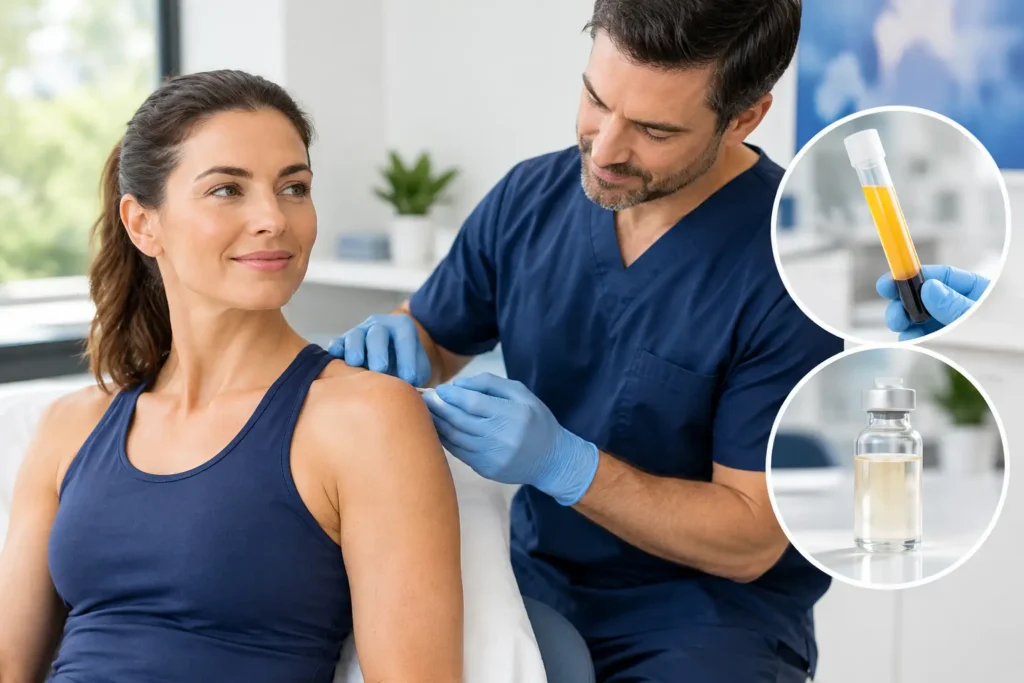
A painful shoulder, knee, elbow, or heel can make everyday movement feel like a negotiation. For active adults, busy professionals, and anyone focused on staying mobile as they age, the question is often whether PRP versus cortisone injections is the better option. The honest answer is that neither treatment is automatically right for every injury, joint, or person.
Both are used to help manage musculoskeletal pain, but they work in very different ways. A thoughtful decision starts with identifying the source of pain, understanding the condition of the tissue involved, and considering your health goals beyond short-term relief.
PRP versus cortisone injections: the core difference
Cortisone is a commonly used term for a corticosteroid injection. Corticosteroids are medications designed to reduce inflammation. When inflammation is a major driver of pain, a cortisone injection may help calm the irritated area and make movement more manageable.
Platelet-rich plasma, or PRP, is prepared from a small sample of your own blood. The blood is processed to concentrate platelets, which contain signaling proteins involved in the body’s normal healing response. The PRP is then injected into the targeted area. Rather than functioning as an anti-inflammatory medication, PRP is intended to support the body’s repair processes.
That distinction matters. Cortisone generally focuses on reducing inflammation and symptoms. PRP is a regenerative treatment approach that may be considered when the goal is to support healing in certain injured or degenerative tissues. Results vary with both options, and each has a different place in a personalized care plan.
When cortisone may be considered
Cortisone injections can be helpful when pain is strongly related to inflammation. Certain joint conditions, inflamed bursae, and some flare-ups involving soft tissue may respond well to an anti-inflammatory approach. Reducing discomfort may also help a person participate more comfortably in physical therapy, mobility work, or other parts of a recovery plan.
However, symptom relief is not the same as tissue repair. If a tendon has structural degeneration or a joint has ongoing mechanical stress, reducing inflammation alone may not address the full issue. This is why a provider may look beyond the location of pain and consider movement patterns, activity demands, prior injuries, body composition, and overall metabolic health.
Cortisone is not usually a simple “more is better” treatment. Repeated injections in some areas may not be appropriate because corticosteroids can affect tissue quality. The right frequency, location, and approach depend on the diagnosis and the individual patient.
Potential benefits and limitations of cortisone
A cortisone injection may offer meaningful relief for the right condition, particularly when inflammation is limiting daily function. It is often familiar to patients and can be part of a broader plan for returning to comfortable movement.
Its limitations are equally important to understand. It may not be the best option for every tendon problem or for pain caused by a structural injury. People with diabetes or concerns about blood sugar, certain infections, medication considerations, or other health conditions need individualized medical guidance before treatment. A qualified clinician can explain the potential risks and whether an injection fits safely into your care plan.
When PRP may be considered
PRP is often discussed for chronic tendon concerns, some ligament injuries, and selected joint conditions. It may be considered when tissue healing is a key focus and when a provider believes platelet-rich plasma is appropriate for the specific area being treated.
For example, PRP may be part of the conversation for persistent tendon pain that has not improved with activity modification, rehabilitation, or other conservative measures. It may also be considered for some people with joint discomfort who want to explore a treatment designed to support the body’s natural healing response.
PRP is not a cure-all, and evidence differs by condition, injection site, and technique. It should not be viewed as a replacement for a clear diagnosis, proper rehabilitation, or changes that reduce ongoing strain on the affected tissue. A personalized plan may include PRP alongside targeted exercise, shockwave therapy when appropriate, recovery support, and attention to factors that can influence healing.
Potential benefits and limitations of PRP
Because PRP uses a patient’s own blood components, it offers a different option from medication-based injections. It may appeal to patients who want a regenerative approach and are willing to follow a care plan that supports recovery rather than simply masking discomfort.
PRP also has limitations. The preparation process and treatment protocols can vary, which is one reason outcomes are not identical for every patient. It may not be appropriate for every type of pain, advanced injury, active infection, certain blood-related conditions, or people taking medications that affect bleeding or platelet function. Your provider should review your medical history and current medications before recommending treatment.
The diagnosis should guide the injection
Pain in the same body part can come from very different causes. Knee pain, for instance, may involve a joint, a tendon, a ligament, surrounding muscles, or referred pain from another area. Shoulder pain may arise from inflammation, tendon changes, joint wear, or a movement pattern that keeps irritating the tissue.
Choosing an injection before clarifying the problem can lead to frustration. A proper evaluation may include a discussion of symptoms, activity level, prior treatments, health history, and appropriate diagnostics. In some cases, imaging or referral to another specialist may be necessary to better understand the source of pain.
The goal is not simply to select PRP or cortisone. The goal is to choose the option that best matches the condition, your safety profile, and what you want to be able to do in daily life.
Questions that help guide the decision
A good consultation should leave you with a clear understanding of why a treatment is or is not being recommended. Consider asking whether the pain appears to be primarily inflammatory, degenerative, or related to a specific injury. Ask what role rehabilitation, strength, mobility, and activity modification should play alongside an injection.
It is also reasonable to ask what outcome is realistic for your condition. Some patients are seeking enough symptom control to return to exercise or work with less limitation. Others are more focused on supporting tissue recovery over time. Those are different goals, and they may point toward different treatment choices.
Finally, discuss your broader health picture. Sleep, nutrition, blood sugar regulation, hormone changes, body composition, and recovery habits can all affect how the body responds to training, injury, and treatment. Persistent pain is rarely improved by one isolated decision alone.
A more personalized approach to recovery
At MedSmart Wellness Centers in Aventura, PRP and shockwave therapy can be considered within a physician-led plan built around your health goals and clinical needs. That may begin with a consultation and appropriate diagnostics, then continue with follow-up to assess how you are feeling and functioning.
For some patients, an anti-inflammatory injection may be the most practical next step. For others, PRP may better align with the condition and a long-term recovery strategy. In certain situations, neither may be the first recommendation. Physical therapy, further evaluation, changes in training, or another form of care may be more appropriate.
The best choice is not the trendiest injection or the fastest-sounding option. It is the one that makes sense for your diagnosis, your body, and the life you want to keep living. If joint or tendon pain is holding you back, speak with a MedSmart provider about a personalized evaluation and the treatment options that may help you move forward with greater confidence.