
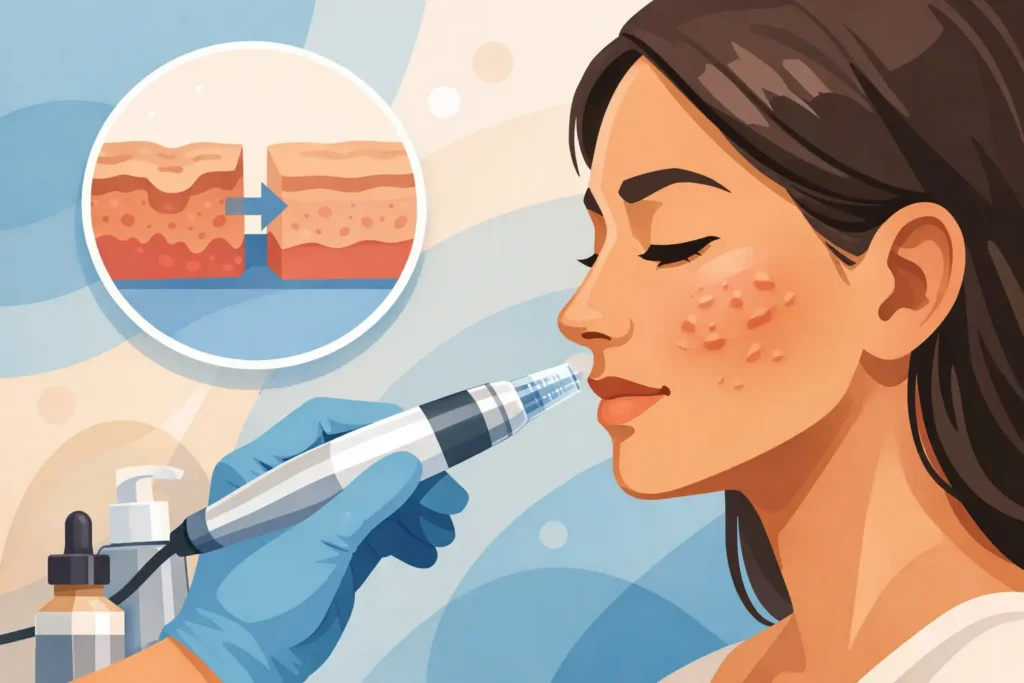
Acne may be temporary, but the texture changes it leaves behind can stay visible long after breakouts stop. Microneedling for acne scars is a clinically guided option for patients who want to improve uneven texture, soften depressed scars, and feel more confident in skin that reflects how well they care for themselves.
The goal is not to erase every scar overnight. It is to stimulate a healthier remodeling process within the skin, gradually improving its texture, firmness, and overall quality. For the right candidate, a personalized series can create meaningful change without surgery or extended downtime.
How Microneedling for Acne Scars Works
Microneedling uses a medical-grade device with very fine needles to create controlled microchannels in the skin. These tiny injuries prompt the body’s natural repair response, including the production of collagen and elastin. Collagen is one of the structural proteins that helps skin look smoother, firmer, and more even.
Acne scars often form when inflammation damages collagen during a breakout. Depressed scars can pull the skin inward, creating shadows and uneven texture that makeup and skincare alone cannot fully address. By encouraging collagen remodeling over time, microneedling can help lift and soften the appearance of those irregularities.
Treatment is not a one-size-fits-all procedure. Needle depth, treatment intensity, the number of sessions, and whether to combine microneedling with regenerative options such as platelet-rich plasma (PRP) should reflect your scar pattern, skin tone, current acne activity, and recovery goals.
Which Acne Scars Respond Best?
Microneedling is often most helpful for atrophic acne scars, meaning scars that sit below the surface of the skin. Rolling scars, which create broad, wave-like unevenness, and many boxcar scars, which have more defined edges, can respond well to a thoughtfully planned treatment series.
Very narrow, deep ice-pick scars are usually more challenging. They may require a different approach or a combination plan rather than microneedling alone. Raised scars, known as hypertrophic or keloid scars, also require careful medical evaluation because stimulating the skin may not be appropriate in every case.
Active, inflamed acne should be managed before treatment begins. Treating skin that is breaking out significantly can increase irritation and may contribute to more inflammation. A consultation should look beyond the scar itself and consider what may still be driving acne, from skincare habits and hormones to stress, medications, and lifestyle factors.
What a Treatment Visit Feels Like
A well-managed appointment begins with a skin assessment and a conversation about your goals. Your provider will evaluate the types of scars present, your skin sensitivity, prior treatments, and any history of pigmentation changes or abnormal scarring.
Before microneedling, the skin is cleansed and a topical numbing cream is typically applied to improve comfort. During treatment, patients commonly feel pressure and a vibrating or prickling sensation. The procedure itself often takes less than an hour, depending on the area being treated.
Afterward, the skin usually looks pink to red, similar to a moderate sunburn. Some warmth, tightness, mild swelling, and pinpoint bleeding can occur with deeper treatments. These effects are expected and generally improve over the next several days. Your provider should give you clear aftercare instructions based on the intensity of your treatment and your individual skin needs.
Results Build Gradually, Not Instantly
This is a collagen-stimulation treatment, which means patience matters. You may notice a fresher appearance after the initial healing phase, but deeper improvements in texture develop as the skin remodels over the following weeks and months.
Many patients benefit from a series of three to six sessions, often spaced about four to six weeks apart. The right number depends on the depth and type of scarring, how your skin responds, and whether microneedling is being paired with PRP, radiofrequency microneedling, chemical peels, or other treatments.
A realistic goal is visible improvement, not perfection. In the right plan, scars may look less pronounced, makeup can sit more smoothly, and the skin can appear more refined in direct light and close-up photos. Results vary, and more severe scarring may require a phased approach over several months.
Why Personalization Matters for Miami Skin
In South Florida, sun exposure is a practical part of everyday life. That makes pre- and post-treatment sun protection especially relevant. Ultraviolet exposure can increase inflammation and raise the risk of post-inflammatory hyperpigmentation, particularly for patients with medium to deep skin tones or a personal history of dark marks after acne.
A personalized plan accounts for melanin-rich skin, recent tanning, skincare ingredients, and social downtime. Retinoids, exfoliating acids, benzoyl peroxide, and certain active products may need to be paused before and after treatment according to your provider’s instructions. Your skin should also be protected with broad-spectrum sunscreen and kept well moisturized while it heals.
Microneedling can be appropriate for a wide range of skin tones when performed correctly, but technique and preparation matter. This is one reason a clinical assessment is more valuable than buying an at-home roller and hoping for the best.
At-Home Devices Are Not the Same as Clinical Treatment
At-home microneedling tools are often marketed as a shortcut to smoother skin. The difference is control. Professional devices allow trained providers to adjust needle depth, treatment pattern, and intensity based on specific areas of the face. At-home devices generally use shorter needles and cannot safely or effectively address deeper scars at the same level.
There is also a hygiene concern. Reusing or improperly cleaning a device can introduce bacteria into the skin. Excessive pressure, using needles that are too long, or treating active acne can lead to irritation, infection, pigmentation changes, and potentially more scarring.
If acne scars are affecting your confidence, the most efficient path is usually a professional evaluation. It helps you avoid spending months on products or devices that cannot reach the level of the scar.
When Combination Care Makes Sense
Microneedling can be highly effective on its own, but some scars benefit from combination treatment. PRP may be applied or introduced during microneedling to support the skin’s repair process using growth factors from your own blood. Radiofrequency microneedling may be considered when texture concerns are paired with laxity or when deeper remodeling is appropriate.
Other patients may need targeted treatments for individual scars, pigment-focused care for dark marks, or medical acne management before beginning scar revision. The right sequence matters. Treating ongoing breakouts, supporting skin barrier health, and then addressing residual scarring often delivers a more stable outcome.
At MedSmart Wellness Centers, an aesthetics plan can be considered within a broader picture of skin health, recovery, and long-term confidence. For some patients, that means focusing solely on a scar-treatment series. For others, it means addressing the factors that affect inflammation, hormonal balance, or overall wellness alongside aesthetic goals.
Who Should Wait or Choose Another Option?
Microneedling is not ideal for everyone at every moment. Treatment may need to be postponed if you have active cystic acne, a skin infection, open wounds, a recent sunburn, or certain inflammatory skin conditions. People with a history of keloid scarring, bleeding disorders, immune suppression, or recent isotretinoin use should discuss their history carefully with a qualified medical provider.
Pregnancy, medications, and recent cosmetic procedures can also affect timing. Honest disclosure during your consultation protects both your safety and your results. A responsible provider will recommend waiting when the skin is not ready rather than pushing forward with a procedure.
Start With a Plan That Matches Your Skin
The best scar treatment plan begins with an honest look at what is actually present: scar type, acne activity, skin tone, tolerance for downtime, and the result you hope to see. Bring photos of your skin at different stages if they help show how acne and scarring have changed over time.
A personalized consultation can clarify whether microneedling is the right first step, whether combination care would be more effective, and how to fit treatment into your schedule. Smoother-looking skin is rarely the result of one impulsive appointment. It comes from a plan that respects your skin’s biology and gives it the time and support to rebuild.