
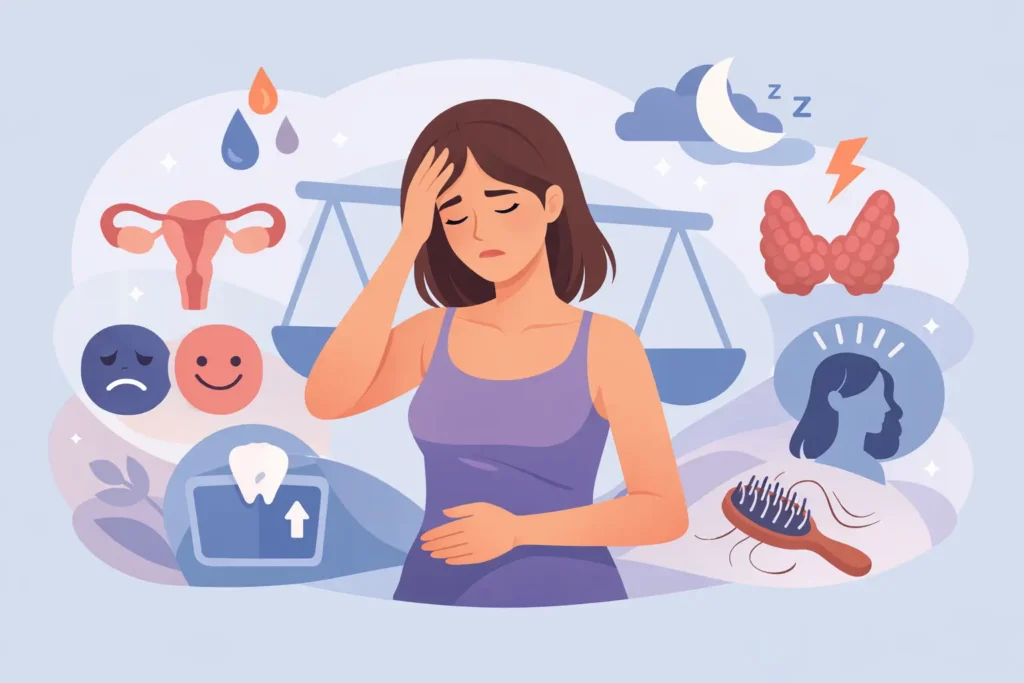
Hormone imbalance symptoms women may notice are often easy to dismiss at first. You may blame a demanding work schedule for the fatigue, a change in routine for weight gain, or stress for restless sleep and a shorter fuse. But when those changes persist, cluster together, or leave you feeling unlike yourself, they deserve a closer look.
Hormones influence far more than reproductive health. They help regulate energy, metabolism, body composition, mood, sleep, skin, sexual function, and menstrual cycles. When hormone levels shift, the effects can be physical, emotional, and frustratingly subtle. A personalized medical evaluation can help separate normal life changes from symptoms that may benefit from treatment.
Hormone Imbalance Symptoms Women Commonly Experience
A hormone imbalance does not look the same for every woman. Age, stress levels, medications, sleep, nutrition, medical history, and life stage all influence how symptoms show up. Some women experience noticeable menstrual changes, while others first notice reduced motivation in the gym, stubborn changes in body composition, or a decline in sexual wellness.
Common symptoms can include:
- Persistent fatigue or low energy, even after adequate sleep
- Unexplained weight gain, difficulty losing weight, or a loss of lean muscle
- Irregular, unusually heavy, or increasingly painful periods
- Mood changes such as irritability, anxiety, low mood, or brain fog
- Sleep disruption, including trouble falling asleep or waking during the night
- Low libido, vaginal dryness, discomfort during intimacy, or reduced sexual satisfaction
- Hot flashes, night sweats, or sudden temperature sensitivity
- Hair thinning, acne, dry skin, or other changes in skin texture
One symptom alone does not confirm a hormone concern. For example, fatigue may be connected to poor sleep, anemia, thyroid dysfunction, nutrient deficiencies, chronic stress, or a demanding season of life. The pattern matters. When several symptoms appear together or continue despite healthy habits, it is worth discussing them with a qualified clinician.
Why Symptoms Can Change at Different Life Stages
Hormones naturally fluctuate throughout the menstrual cycle, during pregnancy and postpartum recovery, and during the transition to menopause. Those shifts are normal, but that does not mean you have to simply push through symptoms that affect your quality of life.
In Your 20s and 30s
In younger adulthood, irregular cycles, acne, unwanted hair growth, difficulty managing weight, or fertility concerns may point to issues that require medical assessment. Polycystic ovary syndrome, thyroid conditions, elevated stress hormones, and changes in insulin sensitivity can all affect how you feel and function.
Women in this stage may also be balancing career pressure, travel, inconsistent meals, disrupted sleep, and intense exercise programs. Lifestyle factors can influence hormone signaling, but they are not the whole story. Assuming every symptom is stress can delay useful answers.
In Your 40s and Early 50s
Perimenopause can begin years before periods stop. Estrogen and progesterone may fluctuate unpredictably, which can lead to heavier or irregular periods, sleep changes, mood shifts, hot flashes, brain fog, and changes in body composition. Many women are surprised by how early these shifts can begin because they expect menopause symptoms to arrive all at once.
This is also a time when maintaining muscle, metabolic health, and bone density becomes increasingly important. A clinical plan may consider symptoms, health history, body composition, and appropriate lab work rather than relying on age alone.
After Menopause
After menopause, lower estrogen levels may contribute to hot flashes, sleep disruption, vaginal dryness, low libido, changes in skin quality, and shifts in fat distribution. These symptoms can affect confidence, relationships, training consistency, and daily comfort. Effective care is not one-size-fits-all, particularly for women with specific medical histories or risk factors.
What Can Be Mistaken for a Hormone Problem?
The internet makes it tempting to label every frustrating symptom a hormone imbalance. That shortcut can be misleading. Thyroid disorders, iron deficiency, vitamin deficiencies, insulin resistance, depression, sleep apnea, autoimmune conditions, medication side effects, and chronic stress can create symptoms that overlap with estrogen, progesterone, or testosterone changes.
That overlap is exactly why personalized evaluation matters. A clinician should review your symptoms in context, including cycle history when applicable, sleep, nutrition, activity level, medications, family history, and relevant health conditions. Testing may be useful, but results should be interpreted alongside your experience and not treated as a standalone answer.
A single lab value rarely tells the whole story. Hormone levels can vary by time of day, menstrual-cycle timing, medication use, and the testing method used. The goal is not to chase a perfect number. It is to identify a safe, medically appropriate path toward better energy, function, comfort, and long-term health.
When to Seek Medical Guidance
You do not need to wait until symptoms become overwhelming. Consider scheduling an evaluation if you have persistent fatigue, significant cycle changes, new hot flashes or night sweats, ongoing low libido, or body composition changes that do not respond to a consistent approach to nutrition and training.
Seek prompt medical attention for very heavy bleeding, bleeding after menopause, severe pelvic pain, sudden chest pain, fainting, shortness of breath, or severe mood symptoms. These concerns need timely assessment and should not be self-treated as a wellness issue.
For nonurgent symptoms, an experienced clinician can help you move beyond generic advice. Rather than being told to sleep more or cut calories without context, you can explore the factors affecting your results and develop a realistic plan for your health goals.
A Personalized Approach to Hormone Health
Treatment depends on the cause of your symptoms, your stage of life, and your personal health profile. For some women, the right next step may involve addressing sleep, stress, nutrition, strength training, or nutrient deficiencies. For others, medically supervised hormone therapy or targeted treatment for thyroid, metabolic, or reproductive concerns may be appropriate.
Hormone replacement therapy can be highly beneficial for properly selected patients, especially when menopausal symptoms are affecting daily life. It also requires thoughtful screening, ongoing monitoring, and a discussion of benefits and risks. A treatment plan should never be based on a trend, a friend’s protocol, or a one-size-fits-all online questionnaire.
At MedSmart Wellness Centers, a consultation can connect symptoms with deeper clinical insight. Personalized programs may incorporate medical history, diagnostic testing, body composition data, and ongoing follow-up to support goals such as improved energy, healthier weight management, sexual wellness, strength, and confidence. The most effective plan is one that fits your body and can evolve as your needs change.
Feeling tired, disconnected from your body, or frustrated by symptoms you cannot explain is not a personal failure. It is useful information. A thoughtful medical conversation can give those changes the attention they deserve and help you take the next step with greater clarity.