
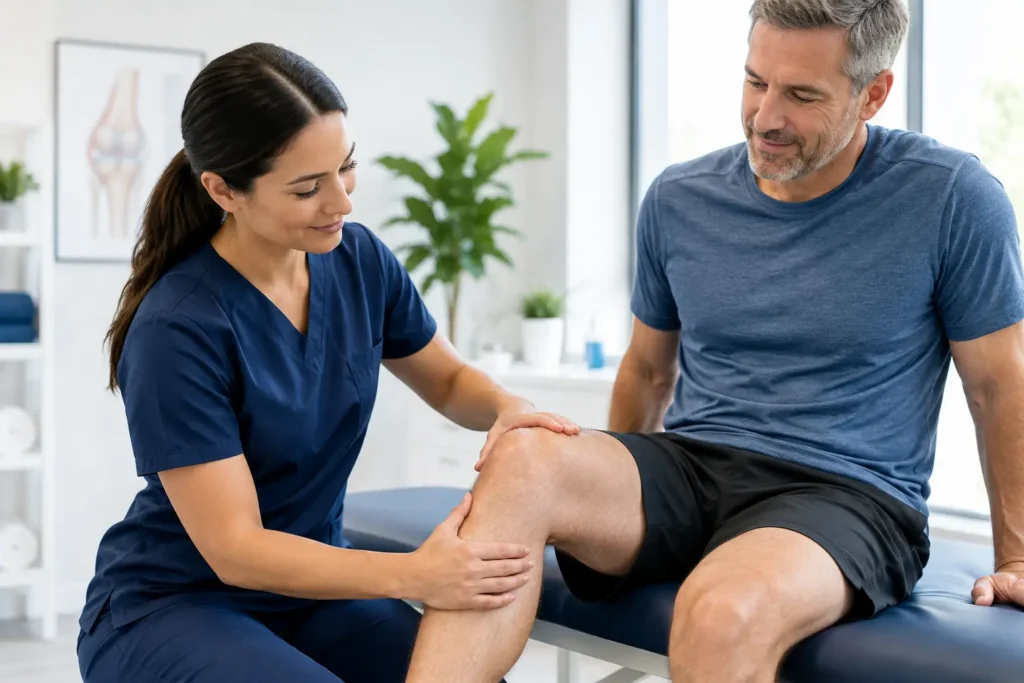
A stiff knee after a long walk, an aching shoulder that interrupts sleep, or hip pain that makes getting up from a chair harder can gradually limit the activities that keep you feeling like yourself. So, does PRP help joint pain? For some people, platelet-rich plasma, or PRP, may help reduce pain and support function, especially when symptoms are related to certain orthopedic conditions. But it is not a universal solution, and the right answer depends on the joint, the diagnosis, the severity of tissue changes, and your overall health.
PRP is often discussed as a regenerative treatment, but that phrase needs context. The goal is not to promise that damaged cartilage or a worn joint will be restored to its original condition. Instead, PRP uses concentrated components from your own blood to support the body’s natural healing response. A careful medical evaluation helps determine whether it is a reasonable option for your goals, activity level, and joint health.
What PRP Is and How It Works
Platelets are small blood cells best known for helping blood clot after an injury. They also contain growth factors, which are signaling proteins involved in tissue repair and inflammation management. During PRP treatment, a clinician draws a small amount of blood and processes it to concentrate the platelets. That platelet-rich portion is then injected into the area being treated.
The purpose of a PRP injection is to place a higher concentration of these natural signaling components near injured or irritated tissue. In joint care, the treatment may be used for concerns involving the knee, shoulder, hip, ankle, or surrounding tendons and ligaments. The exact approach depends on the source of pain, not simply the location where pain is felt.
For example, knee pain may stem from osteoarthritis, a meniscus problem, tendon irritation, a prior injury, or mechanics involving the hips and feet. Each possibility calls for a different conversation. PRP may be considered as part of a broader plan, but it should not replace an accurate diagnosis.
Does PRP Help Joint Pain From Arthritis?
Research on PRP for joint pain is promising in some settings, particularly for mild to moderate knee osteoarthritis. Osteoarthritis occurs when the structures within a joint change over time, often including cartilage wear, inflammation, and changes in the bone beneath the cartilage. It can cause pain, stiffness, swelling, and reduced range of motion.
Some patients report improved comfort and function after PRP treatment. The degree of improvement varies, and not everyone responds the same way. Studies also differ in the type of PRP prepared, the number of injections used, how outcomes are measured, and which patients are included. That makes it difficult to predict an individual result with certainty.
PRP may be less likely to meet expectations when a joint has advanced structural damage or when pain is coming from an issue that PRP does not address. Severe loss of joint space, major instability, a fracture, nerve-related pain, or certain inflammatory conditions may require a different medical approach. The most useful question is not whether PRP works in general, but whether it fits your specific diagnosis.
When PRP May Be Worth Discussing
PRP may be worth exploring for active adults who want a nonsurgical option for persistent joint or tendon discomfort and have not achieved adequate relief with basic conservative care. It may also appeal to people who want to support mobility while staying engaged in strength training, walking, recreational sports, or daily responsibilities.
A good candidate is not defined by age alone. A physically active person in their 60s with early knee osteoarthritis may have different needs from a younger person whose knee pain began after a sports injury. Likewise, a busy professional with shoulder pain from repetitive use may need a plan that addresses posture, muscle strength, movement patterns, and recovery habits along with any procedure.
Before recommending PRP, a medical provider should review your symptoms, health history, medications, previous treatments, and relevant imaging or diagnostic findings. Some health conditions, active infections, bleeding concerns, or medication use can affect whether PRP is appropriate. This is why a physician-led assessment matters.
What PRP Cannot Do
PRP is not a cure for every painful joint. It cannot reliably reverse advanced arthritis, correct a major structural tear, or replace the benefits of maintaining healthy muscle strength and body composition. It also does not eliminate the need to investigate new, severe, or unexplained pain.
Joint pain can be a signal from more than the joint itself. Weakness in surrounding muscles, reduced mobility, excess load on the joint, sleep disruption, metabolic health, and inflammation can all influence how you feel and move. A treatment plan focused only on an injection may miss factors that affect long-term function.
This does not mean PRP has no role. It means the treatment should be viewed realistically: as one potential tool within a personalized plan. For the right person, reducing pain enough to move more comfortably and rebuild strength can be meaningful. Results vary, and treatment decisions should be based on both evidence and your individual circumstances.
PRP Compared With Other Joint Pain Options
Joint pain treatment is rarely one-size-fits-all. Depending on the diagnosis, a provider may discuss activity modification, physical therapy, targeted exercise, weight management, medication options, injection therapies, or referral for additional orthopedic evaluation. PRP can sometimes be part of that conversation.
Its potential advantage is that it uses a preparation made from your own blood rather than a synthetic medication. However, that does not automatically make it the best treatment for every situation. It is also not interchangeable with other injections. Different treatments are designed to address different mechanisms of pain and inflammation.
The most practical comparison is based on your goals. Are you trying to return to tennis, walk comfortably on trips, keep up with grandchildren, or exercise without the next-day flare that has become familiar? Your provider can help connect those goals to a treatment plan that addresses the underlying problem rather than chasing temporary relief alone.
What to Expect From a PRP Evaluation
At a PRP evaluation, the first priority is understanding your pain. Your provider may ask when symptoms began, what movements trigger them, whether there was an injury, what treatments you have tried, and how pain affects sleep, work, exercise, and daily activities. A physical examination and review of prior imaging or other testing may also be helpful.
If PRP is appropriate, your clinician will explain the proposed treatment area, potential benefits, limitations, and possible side effects. As with any injection, temporary soreness, swelling, or bruising can occur. Your provider can also review what activity and follow-up may look like for your individual situation.
At MedSmart Wellness Centers in Aventura, joint-focused PRP can be considered within a broader approach to recovery and long-term wellness. For some patients, evaluating body composition, metabolic health, sleep, or hormone balance may add useful context to recovery goals. These factors do not replace orthopedic assessment, but they can influence energy, muscle maintenance, and the ability to stay active.
Supporting Your Joints Beyond the Procedure
A joint often functions better when the muscles around it are stronger and movement is more efficient. Even when pain makes exercise difficult, the long-term goal is usually to identify a safe, realistic way to keep moving. That may mean adjusting an activity, rebuilding strength gradually, improving mobility, or addressing body composition in a medically guided way.
Recovery also depends on basics that are easy to overlook: consistent sleep, adequate nutrition, managing chronic health conditions, and avoiding the cycle of doing too much on a good day and needing to stop completely afterward. These habits do not make joint damage disappear, but they can help create a better foundation for any treatment plan.
If joint pain is limiting your movement or confidence, a personalized evaluation can clarify whether PRP may help and what other steps deserve attention. Call MedSmart Wellness Centers at (305) 842-2244 to schedule a free consultation. Better joint care begins with a clear diagnosis and a plan built around how you want to live, move, and age.